

Credit Card Travel Medical Insurance
Planning your next trip? Learn how credit card travel medical insurance works, compare coverage, and find out if you need additional protection before you travel.
One of the biggest advantages of carrying a travel credit card is that it may include built-in travel insurance, including travel medical insurance. If you become sick or injured while travelling outside your home province or outside Canada, this coverage can help pay for eligible emergency medical expenses that your provincial health plan may not fully cover.
However, travel medical insurance coverage varies by card. Eligibility requirements, coverage amounts, trip duration limits and exclusions all differ depending on the card issuer and insurance provider. Understanding how your coverage works before you travel can help you avoid unexpected costs if an emergency occurs. This guide explains what credit card travel medical insurance is, what's typically covered, common exclusions, and when you may need additional travel insurance.
What is credit card travel medical insurance?
Travel medical insurance protects you, the cardholder, if you require emergency medical treatment while travelling outside your home province or territory, or outside Canada. Depending on your policy, it can help cover eligible emergency medical expenses such as hospital stays, physician services, ambulance transportation and prescription medication.
For example, someone from Toronto who needs emergency medical treatment while visiting British Columbia may be eligible to make a claim under their credit card's travel medical insurance policy. However, treatment received within their home province generally wouldn't be covered by this benefit.
Coverage amounts, eligibility requirements and maximum trip durations vary by credit card, so it's important to review your certificate of insurance before you travel.
Ratehub.ca Recommends:
Scotiabank Gold American Express
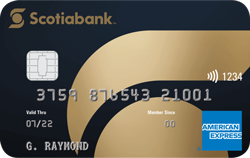
The Scotiabank Gold American Express® Card is one example of a credit card that includes travel medical insurance. It includes up to $1 million in travel emergency medical coverage, along with trip cancellation and interruption, baggage, flight delay and rental car insurance.
View all our picks for the Top Credit Cards for Travel Insurance.
Who is covered by travel medical insurance?
In addition to you, the primary cardholder, your spouse is usually covered by medical travel insurance, as are any dependent children. Dependent children are usually defined as those living with their parent (s) and under the age of 22, or under the age of 26 but attending a post-secondary institution full-time. For coverage to be valid, the cardholder’s account must be open and in good standing with the card company.
Age plays a very important role in travel medical insurance coverage. Travellers under 65 are typically covered for trips lasting up to 15 days. By contrast, people over 65 are often only covered for 4 days. In the event that your trip is longer than your coverage period, purchasing additional travel medical insurance is recommended.
What is covered under travel medical insurance?
Travel medical insurance covers situations where urgent medical care is required. Expenses eligible for reimbursement typically include:
Emergency medical treatment
- Hospital stays
- Physician services
- Emergency surgery
- Diagnostic tests such as X-rays, CT scans and laboratory work
- Prescription medication required as part of your emergency treatment
- Private nursing care when medically necessary
Emergency medical transportation
- Ground ambulance
- Air ambulance
- Medical evacuation
- Return airfare when medically necessary
Additional travel assistance benefits
- Emergency dental treatment for accidental injuries
- Transportation for a family member to your bedside
- Accommodation allowances for a bedside companion
- Vehicle return if you're unable to drive home
- Repatriation of remains
What is NOT covered under travel medical insurance?
While travel medical insurance covers many emergency situations, it doesn't apply in every circumstance. Coverage is subject to the terms and conditions of your policy, and claims may be denied if an exclusion applies. Some of the most common exclusions include:
- Pre-existing conditions: Most policies won't cover medical emergencies related to a pre-existing condition that wasn't considered stable before your departure. Each insurer defines what "stable" means and specifies a stability period, which may be longer for older travellers. For elderly travellers (75 and older), there is usually a longer pre-existing condition period, often up to 1 year
- Situations that do not qualify as emergencies: Any treatment that can be delayed until the traveller returns home will not be covered by the insurance
- Any failure to report the medical emergency to the insurance provider in a timely fashion
- Medical costs that arise out of a failure to take prescribed drugs
- Self-inflicted injuries, including suicide
- Expenses related to substance abuse
- Participation in dangerous activities such as scuba diving, bungee jumping or drag racing
- Pregnancy-related expenses if the trip occurs within 9 weeks of the expected delivery date
- Mental or psychological problems requiring hospitalization
- Travel to a country where the Canadian government has issued a travel advisory
- Acts of terrorism or civil war
Making a travel medical insurance claim
As with all insurance policies, you must be prompt in contacting the policy provider if you are travelling and suffer a medical emergency. The insurance provider will usually specify that you have to make contact in 24-48 for full coverage to apply. After that, they may limit your coverage or deny you benefits altogether.
One of the reasons you need to contact the insurance company immediately is because they may have to approve expenses in advance. For things such as air ambulances and transfers to different medical facilities, the insurance company often mandates that you get their approval beforehand; without it, you may not be eligible for reimbursement of that expense. Life-saving things like emergency surgery are usually excluded from needing advance approval because of the severity of the situation.
Keep in mind that the travel medical insurance is generally secondary to any other insurance you may have. For example, if you are travelling outside the country and need to be hospitalized, your provincial health insurance plan may cover you for some of the expenses (not much, though). You also may be covered by an extended health plan, like one offered by your employer. Coverage by your credit card’s insurance policy is limited to expenses that have not already been reimbursed by these other insurance plans.
Make sure to keep copies of all receipts, medical reports and supporting documentation related to your treatment, as you'll typically need them when submitting your claim. Your insurer may also request proof of travel and confirmation that you met the policy's eligibility requirements.
Before you travel
Before leaving for your trip, take a few minutes to review your coverage:
- Confirm your credit card includes travel medical insurance
- Review the maximum number of covered travel days
- Check whether your spouse or dependants are covered
- Understand any exclusions for pre-existing medical conditions
- Save your insurer's emergency assistance phone number
- Read your certificate of insurance so you know how to make a claim if an emergency occurs
When do you need additional travel medical insurance?
While travel medical insurance included with your credit card can provide valuable protection, it isn't always enough for every trip. Depending on your travel plans, you may want to purchase additional coverage to avoid gaps in protection.
You should consider buying supplemental travel medical insurance if:
You're travelling longer than your card's coverage period
Credit card travel medical insurance only covers a limited number of consecutive travel days. For example, if your card provides 21 days of coverage but you're planning a 45-day trip, your insurance may expire before you return home. In that case, you'll likely need to purchase additional travel medical insurance or extend your existing coverage before you leave.
You have a pre-existing medical condition
If you've recently changed medications, received a new diagnosis or experienced new symptoms related to an existing medical condition, your credit card's travel medical insurance may not cover a medical emergency related to that condition. Because every insurer defines "stable" differently, review your certificate of insurance before travelling and consider supplemental coverage if you're unsure whether your condition qualifies.
You're over the age limit for your card's coverage
Many credit cards reduce the number of covered travel days once you reach age 65. For example, a card that provides 21 days of coverage for younger travellers may only provide four to ten days once you turn 65. If you're planning a two-week vacation or spending several months away for the winter, you may need additional travel medical insurance for seniors to supplement or replace your credit card’s travel medical coverage.
You're travelling to a destination with high healthcare costs
Healthcare costs vary significantly by destination. For example, emergency treatment in the United States can be much more expensive than in many other countries. If your credit card offers a relatively low coverage limit or you're concerned about potential out-of-pocket costs, you may want to compare it with a standalone travel medical insurance policy before you travel.
You're planning activities your policy may exclude
Adventure activities such as skydiving, mountaineering or certain scuba diving excursions and other higher-risk activities may not be covered by your credit card's travel medical insurance. If your trip includes activities that fall outside your policy's definition of covered travel, additional insurance may be necessary.
How to check if your credit card has travel medical insurance
Not all credit cards come with travel medical insurance, and those that do come with different levels of coverage, so it’s important to see what you’re covered for. The first place to check and find out if your credit card has travel medical insurance is the information sheet that came with your credit card when you first got it. If you don’t have the information sheet, call the toll-free number on the back and ask a representative to outline your coverage. Depending on what comes with your credit card, you may wish to either buy extra insurance or switch to a card that provides more generous benefits.